Launch offer — valid today only

📄 Digital book in PDF · read it on your phone or print it

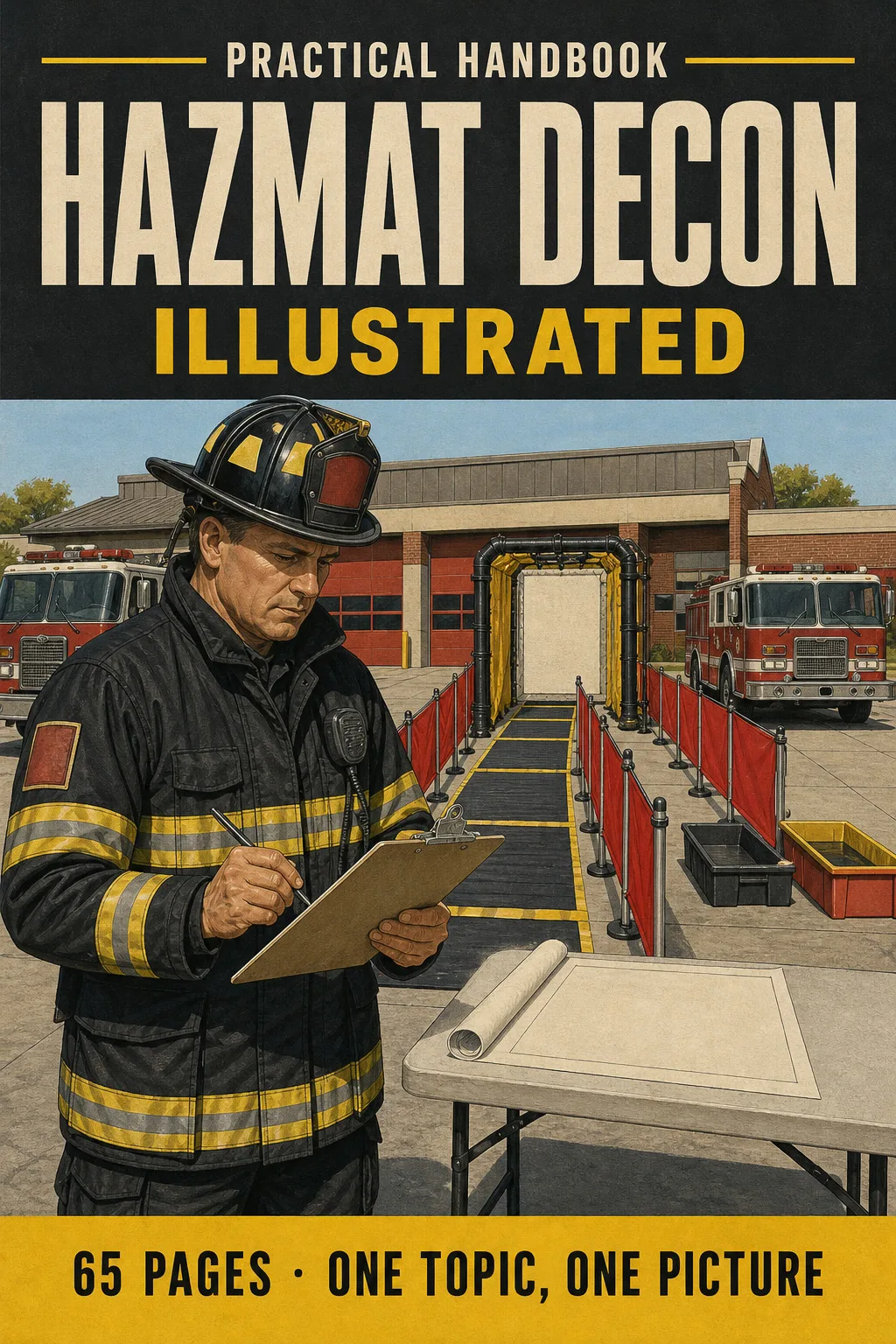
Hazmat Decon in Drawings: Zones, Corridor and Every Station Set Up the Line Without Going Back to the Binder

Zones, corridor, the seven technical decon stations, doffing, mass decon and the hospital lanes. One topic per page: first the drawing, then the distances and steps to remember. 65 illustrated pages.

SHOW ME THE DECON LINE, DRAWN

🔒 Secure checkout · PDF by email · 30-day guarantee

Every topic, its own pageEvery zone and every station drawn, with the explanation right next to it
65 illustrated pages9 parts, from what decon actually does to your department's own page
Up-to-date sourcesNFPA 470, OSHA HAZWOPER and HHS PRISM guidance
PDF by emailFormat

Look Inside the Book

Every page has a big drawing and a box with the distances, intervals and steps you need to know:

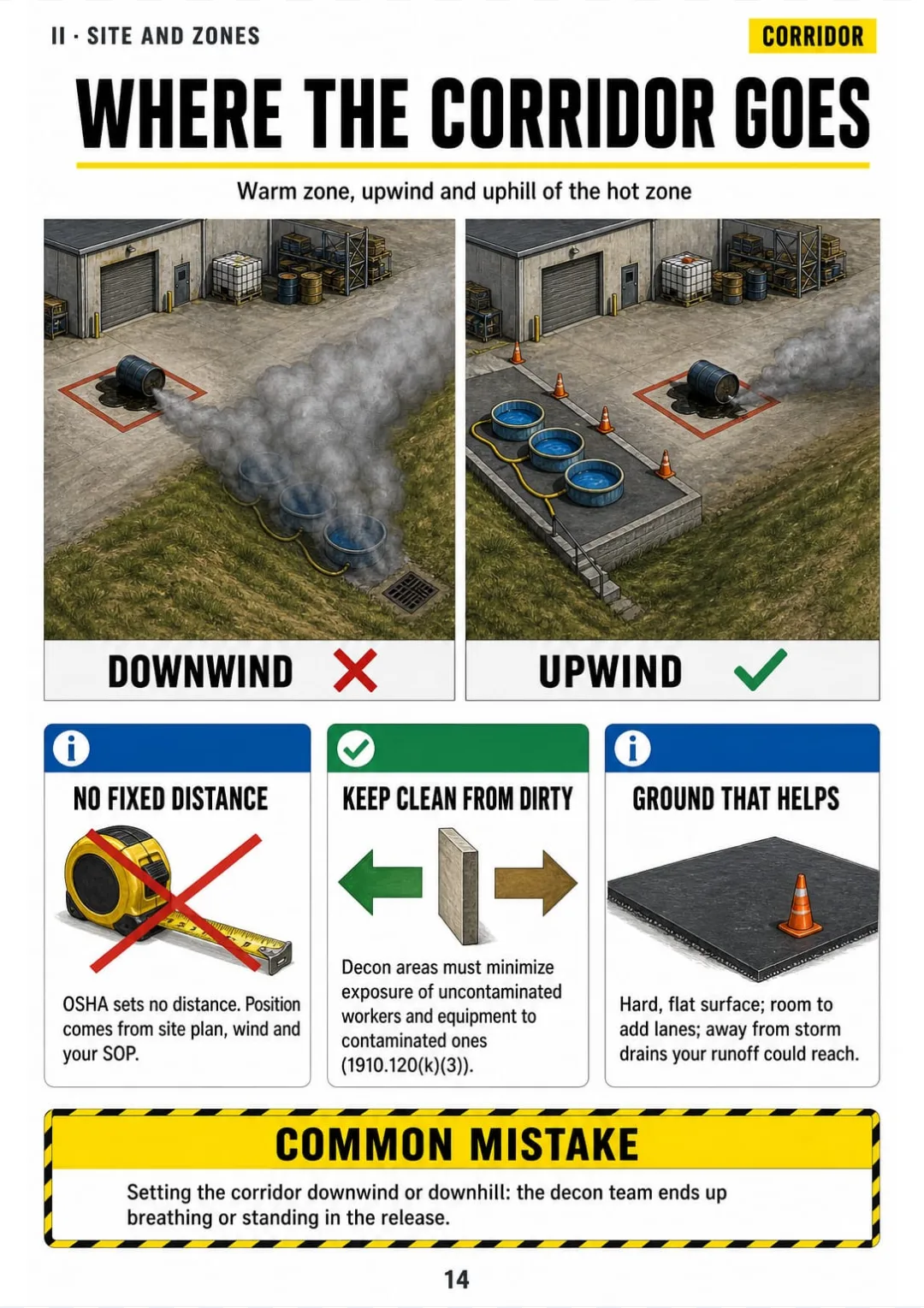
Corridor in the warm zone, upwind and uphill, hard surface, room to grow.
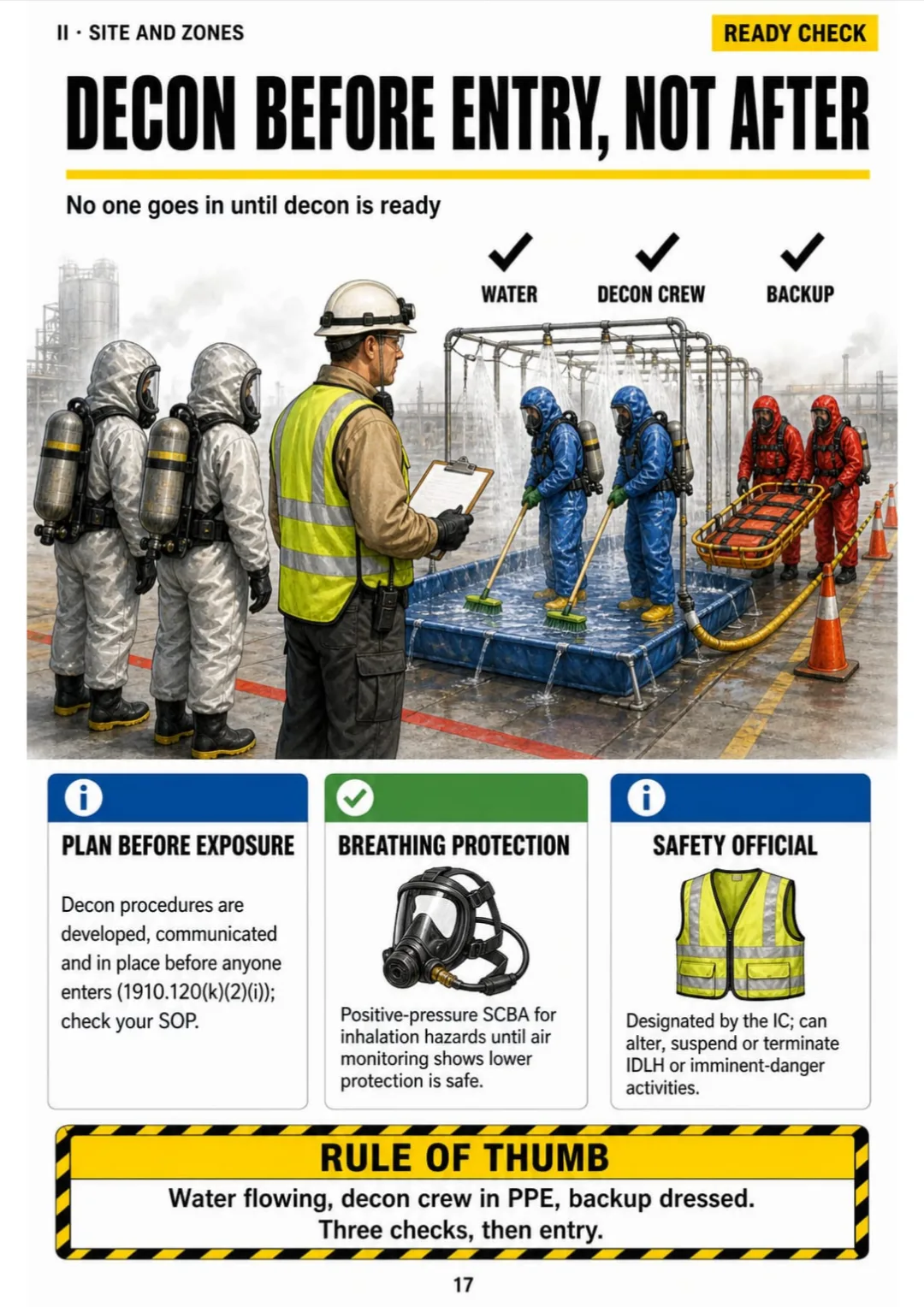
The ready check before entry: water flowing, decon crew in PPE, backup team dressed.
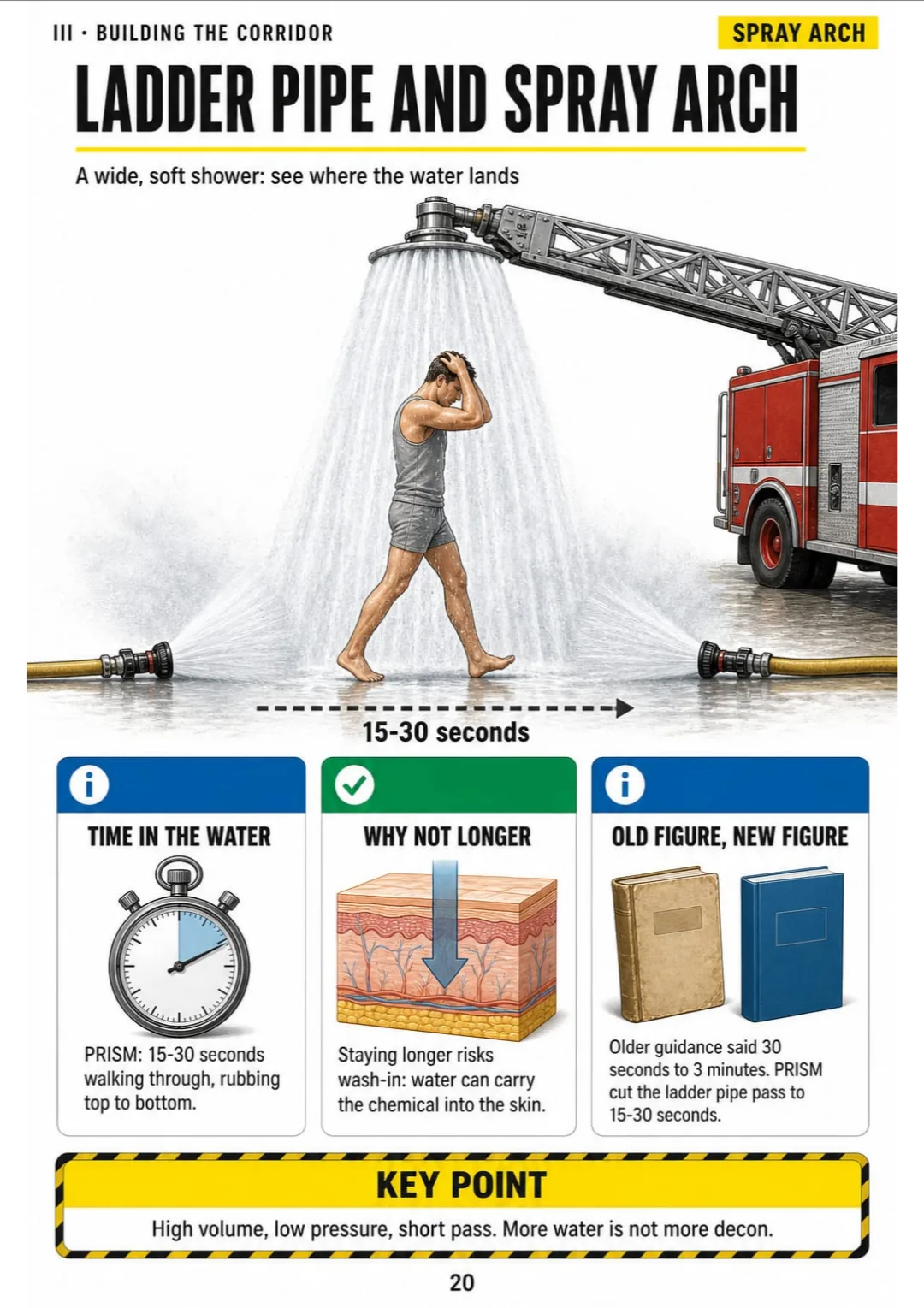
Ladder pipe system: 15-30 seconds per person to avoid wash-in (PRISM 2nd ed.)
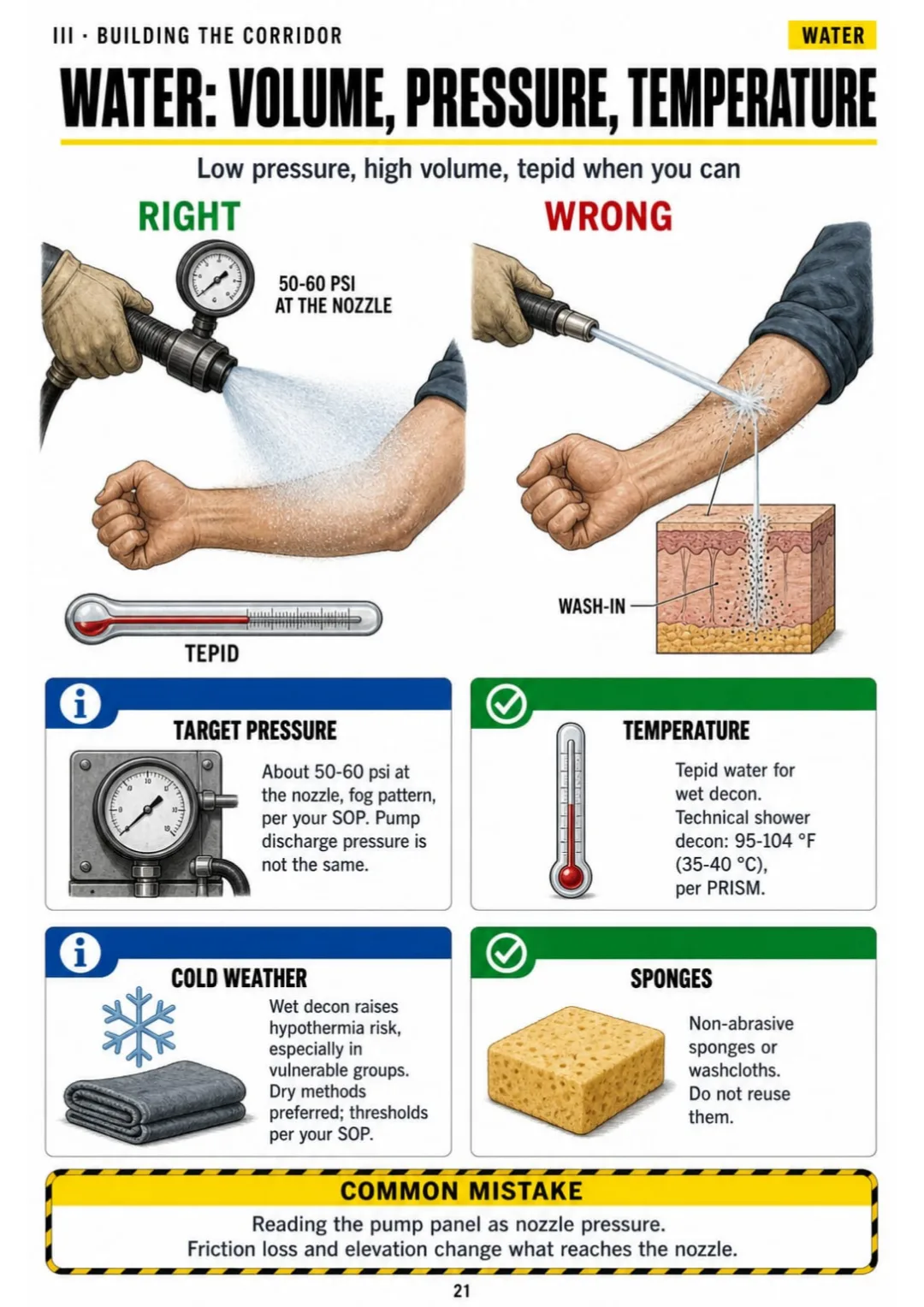
Wet decon: about 50-60 psi at the nozzle, tepid; hard streams cause wash-in
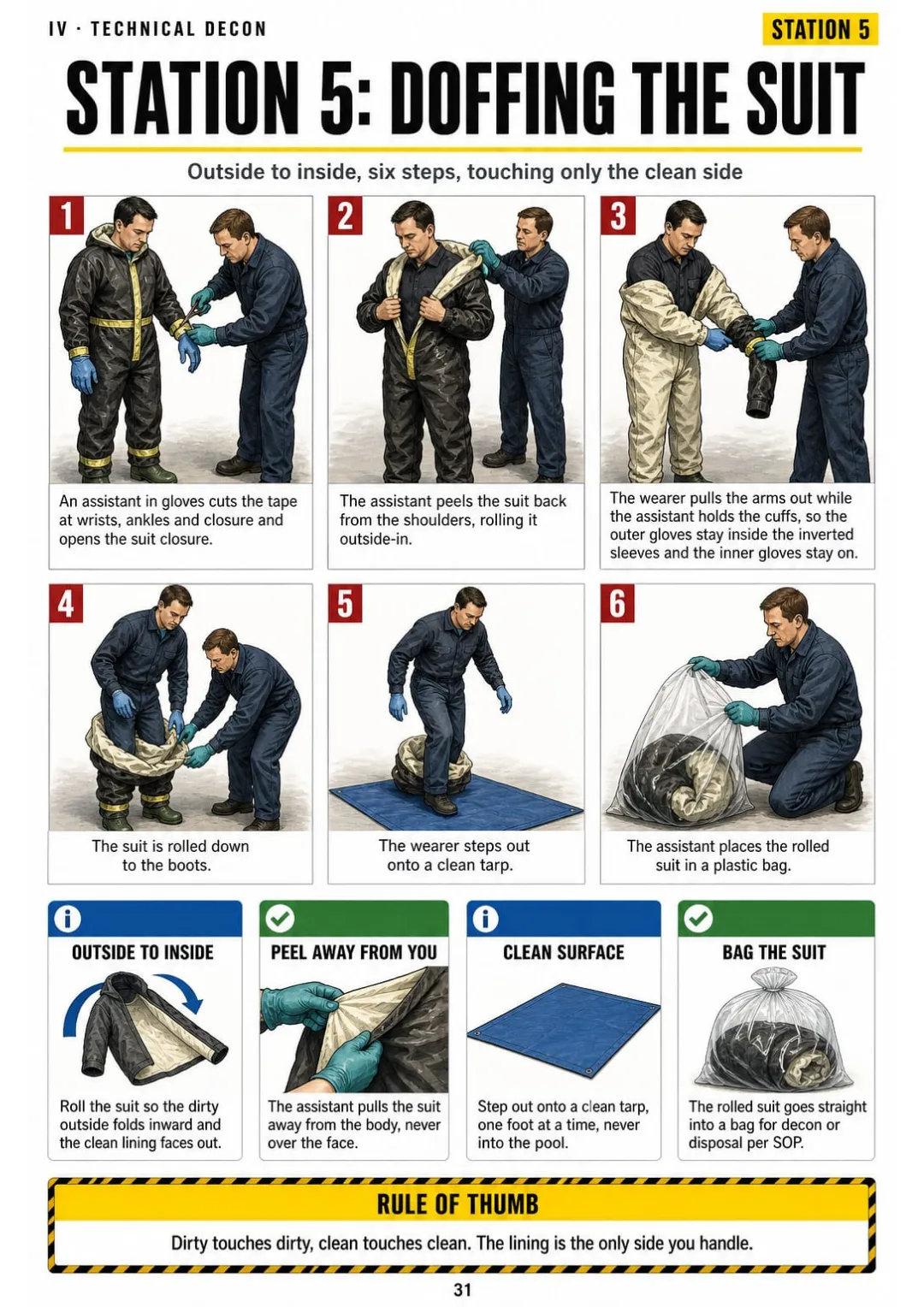
Six steps: open, peel, arms out, roll down, step out, bag
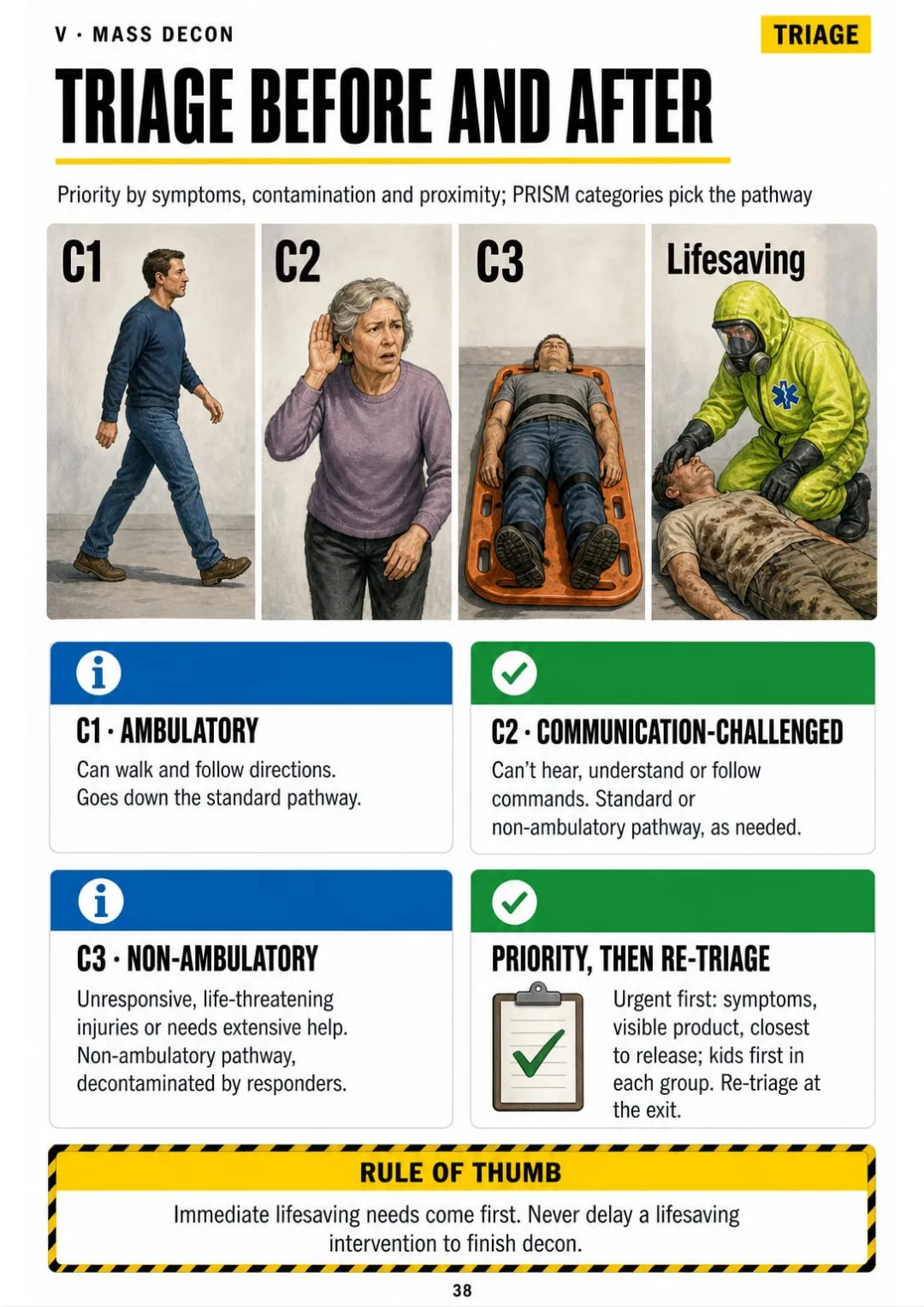
PRISM decon categories: C1 ambulatory, C2 communication-challenged, C3 non-ambulatory
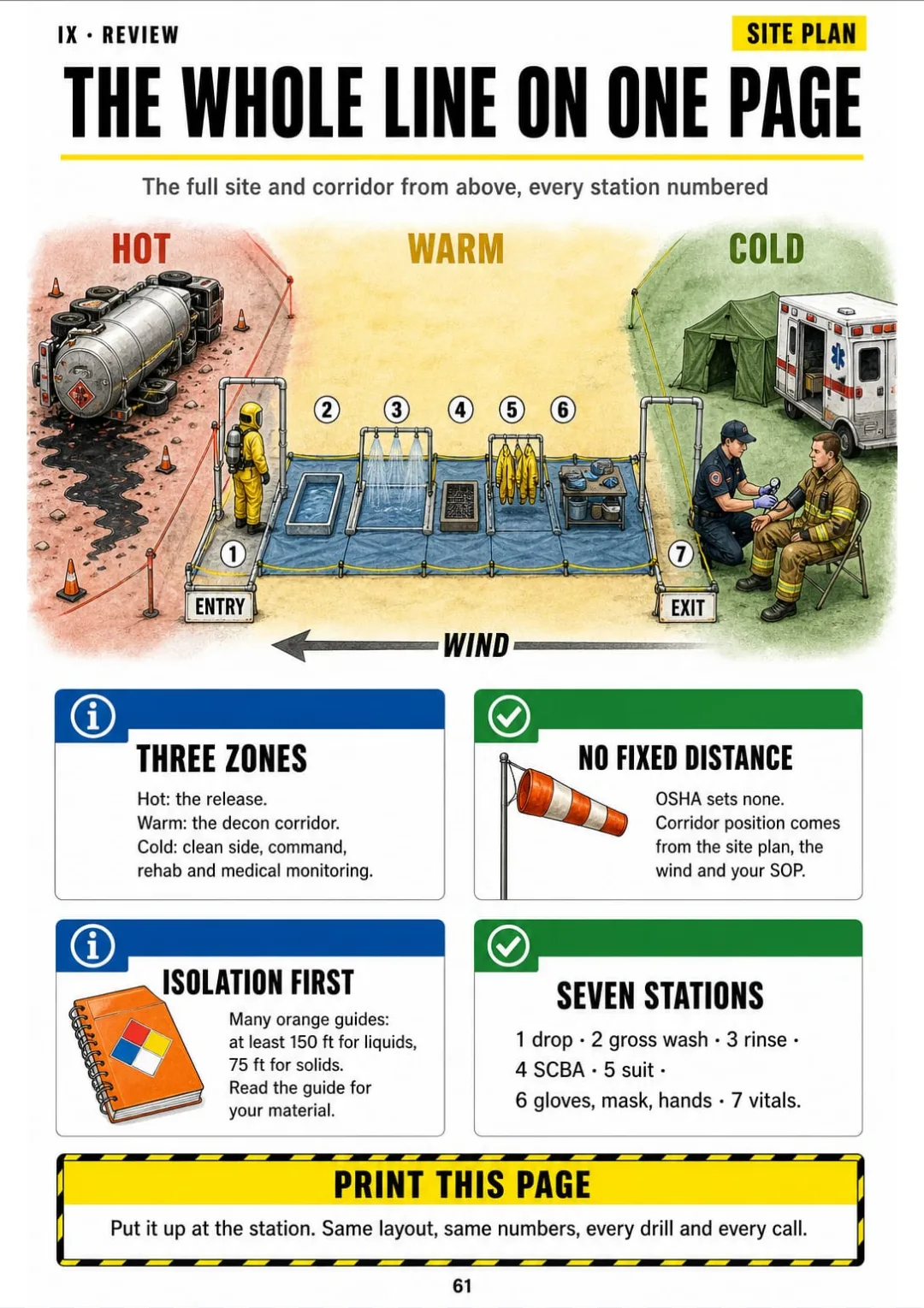
Hot, warm, cold and seven numbered stations from drop to vitals, seen from above.
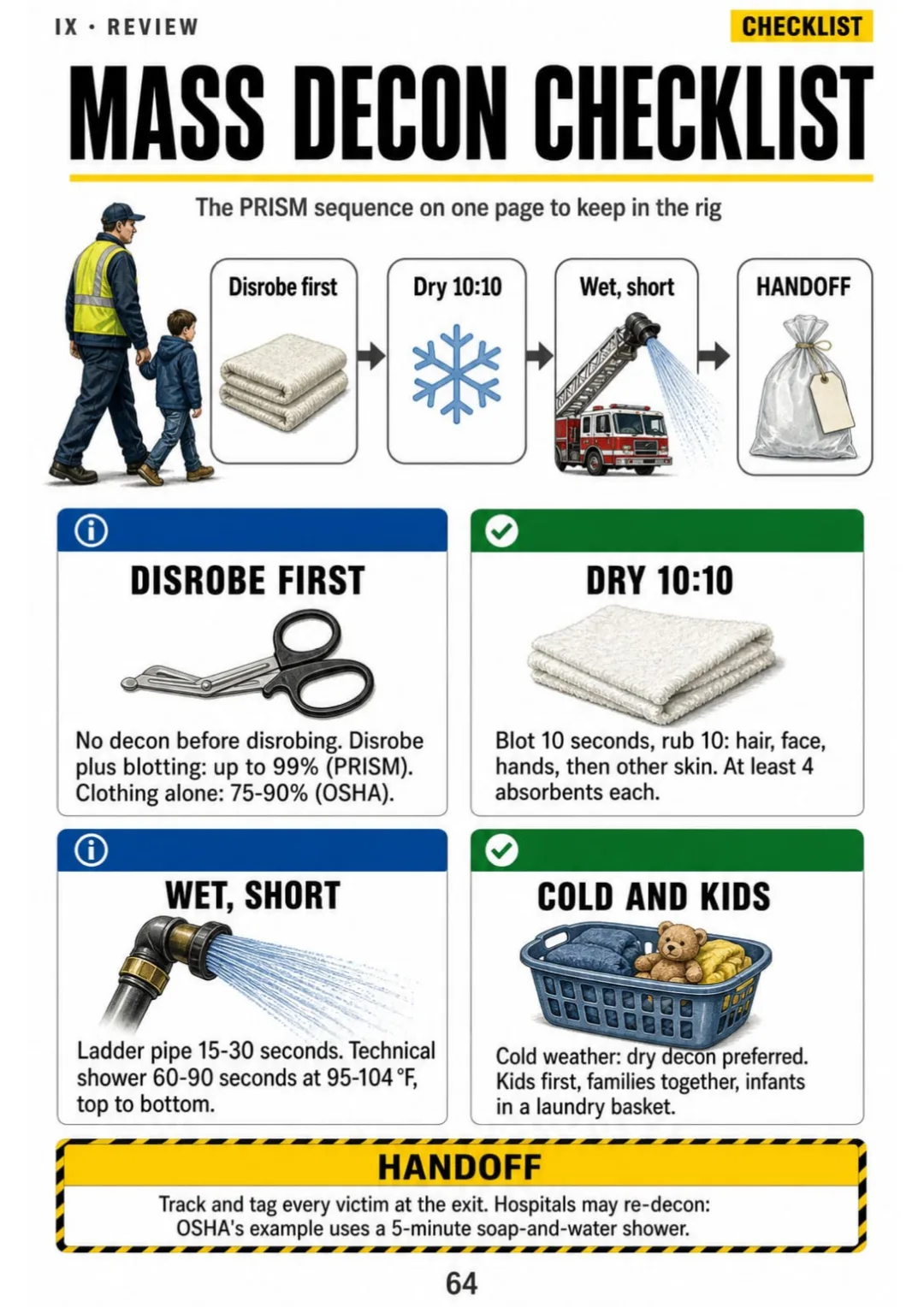
Upwind, disrobe, dry 10:10, ladder pipe 15-30 s, technical 60-90 s, lanes C1-C3.

Swipe to see more →

These are real pages from the book. The table of contents is the full one: 9 parts and 61 topics.

The Problem Isn't You. It's How It Was Explained to You.

You're on scene with two engines, people are walking out of the building coughing, and the IC tells you to get the ladder pipe corridor up. Now.

You've drilled it. But the SOP covers it in paragraphs: nozzle patterns, pump pressure, how long each person stays under the water. On paper, none of it has a shape you can picture on the street.

Ladder pipe system: 15-30 seconds per person to avoid wash-in (PRISM 2nd ed.)

In the book, the ladder pipe system is one drawing: the engines, the fog patterns, the corridor people walk through, and a box with the number that matters: 15-30 seconds per person, to avoid wash-in.

Same with the rest: the site plan from above, where the corridor goes, water pressure and temperature, doffing the suit, the C1-C3 lanes. Each one has its own page.

You look at the drawing, it makes sense, and you set up the line without going back to the binder.

COMPARE FOR YOURSELF

The Same Topic, Two Ways to Learn It

THIS
  • The SOP: lines and lines of text
  • Corridors and stations explained only with words
  • The ladder pipe interval buried in a paragraph
The decontamination corridor shall be established within the warm zone, positioned upwind and, where terrain permits, uphill of the hot zone, at a distance sufficient to prevent exposure of personnel operating within the corridor to vapors, mists or runoff originating from the release site. Selection of the corridor location should take into account surface characteristics, with preference given to paved or otherwise impermeable surfaces to facilitate containment of effluent, as well as the availability of adequate space to permit subsequent expansion of the corridor.
FOR THIS
  • The corridor drawn on the site plan
  • Distances and conditions in one box
  • 15-30 seconds per person, in a box next to the drawing
The ready check before entry: water flowing, decon crew in PPE, backup team dressed.
CONTENTS

Take a Look at the 9 Parts and 61 Topics

Decon in one picture, site and zones, building the corridor, technical decon station by station, mass decon of victims, non-ambulatory and special groups, hospital first receivers, runoff and close-out, and review: 65 pages, all illustrated.

IDecon in One Picture · pp. 5-10
  1. What Decon Actually Does
  2. Exposure vs. Contamination
  3. The Four Kinds of Decon
  4. Wet, Dry and Disrobe
  5. Who Sets the Rules
  6. The Decon Sequence You'll Repeat All Book
IISite and Zones · pp. 11-17
  1. Approach Upwind, Uphill, Upstream
  2. The First Minutes with the ERG
  3. Hot, Warm, Cold: The Site Plan from Above
  4. Where the Corridor Goes
  5. When the Wind Shifts
  6. Control Points and Access
  7. Decon Before Entry, Not After
IIIBuilding the Corridor · pp. 18-25
  1. Emergency Decon in the First Minutes
  2. The Two-Engine Corridor
  3. Ladder Pipe and Spray Arch
  4. Water: Volume, Pressure, Temperature
  5. Tarps, Pools and Containment
  6. Technical Decon Line Layout
  7. Staffing the Line
  8. PPE for the Decon Team
IVTechnical Decon, Station by Station · pp. 26-34
  1. Station 1: Tool and Equipment Drop
  2. Station 2: Gross Decon Wash
  3. Station 3: Secondary Wash and Rinse
  4. Choosing the Decon Solution
  5. Station 4: SCBA Removal
  6. Station 5: Doffing the Suit
  7. Station 6: Gloves, Mask, Hands
  8. Station 7: Medical Monitoring
  9. Checking If Decon Worked
VMass Decon of Victims · pp. 35-43
  1. When It's Mass Decon
  2. Disrobe: The Biggest Step
  3. Rinse, Wipe, Rinse
  4. Triage Before and After the Corridor
  5. Separating Lanes
  6. Talking to Victims Who Are Scared
  7. Bags, Tags and Personal Property
  8. Cold Weather Decon
  9. Victim Tracking at the Exit
VINon-Ambulatory and Special Groups · pp. 44-49
  1. The Non-Ambulatory Lane
  2. Cutting Clothes Away
  3. Children in the Line
  4. Older Adults and People with Disabilities
  5. Responders Who Need Rescue
  6. Pets and Service Animals
VIIHospital First Receivers · pp. 50-54
  1. Self-Presenters at the ER Door
  2. Hospital Decon Zone Layout
  3. PPE for First Receivers
  4. Handoff from EMS to Hospital
  5. Secondary Contamination Inside the Hospital
VIIIRunoff and Close-Out · pp. 55-59
  1. Runoff: Lives First, Then Containment
  2. Containing Decon Water
  3. Breaking Down the Line
  4. Equipment Decon and Disposal
  5. Documentation and Exposure Records
IXReview and Ready to Use · pp. 60-65
  1. Most Common Decon Mistakes
  2. The Whole Line on One Page
  3. Size-Up Checklist
  4. Technical Decon Checklist
  5. Mass Decon Checklist
  6. Your Department's Page

One Page, One Topic, All Clear

Think of it this way:

The call comes in: a release at a plant, people walking out with burning eyes, and you're the one who has to decide where the decon corridor goes.

You open the page for where the corridor goes and it's drawn: the warm zone, the wind arrow, the corridor upwind and uphill, on hard surface, with room to grow.

Six steps: open, peel, arms out, roll down, step out, bag

Same with the ladder pipe and spray arch, doffing the suit in six steps, triage C1 to C3 and containing the runoff: each one on its own page.

Hazmat Decon Illustrated is 9 parts and 61 topics, all drawn, and at the end the whole line on one page, three checklists and a page for your own department.

What you see drawn, you don't have to memorize.

What's Inside Hazmat Decon Illustrated:

Ipp. 5-10

Decon in One Picture

What decon actually does, exposure vs. contamination, the four kinds of decon, wet, dry and disrobe, who sets the rules and the sequence you'll repeat all book.

IIpp. 11-17

Site and Zones

Approaching upwind, uphill and upstream, the first minutes with the ERG, hot, warm and cold from above, where the corridor goes, wind shifts, control points and decon before entry.

IIIpp. 18-25

Building the Corridor

You build the corridor the same way every call: emergency decon, the two-engine corridor, ladder pipe and spray arch, water volume, pressure and temperature, tarps and pools, the technical line, and who staffs it in what PPE.

IVpp. 26-34

Technical Decon, Station by Station

Tool drop, gross wash, secondary wash and rinse, choosing the solution, SCBA removal, doffing the suit, gloves, mask and hands, medical monitoring and checking if decon worked.

Vpp. 35-43

Mass Decon of Victims

When it's mass decon, disrobe, rinse-wipe-rinse, triage before and after, separate lanes, talking to scared victims, bags and tags, cold weather and tracking at the exit.

VIpp. 44-49

Non-Ambulatory and Special Groups

The non-ambulatory lane, cutting clothes away, children, older adults and people with disabilities, responders who need rescue, pets and service animals.

VIIpp. 50-54

Hospital First Receivers

Self-presenters at the ER door, hospital decon zone layout, PPE for first receivers, the EMS handoff and secondary contamination inside the hospital.

VIIIpp. 55-59

Runoff and Close-Out

Runoff with lives first, containing decon water, breaking down the line, equipment decon and disposal, documentation and exposure records.

IXpp. 60-65

Review and Ready to Use

The most common decon mistakes, the whole line on one page, size-up, technical and mass decon checklists, and a page for your department's SOP.

At the end of the book: The whole line on one page, size-up, technical and mass decon checklists, and a blank page for your department's SOP.
Plus: 2 Free Books

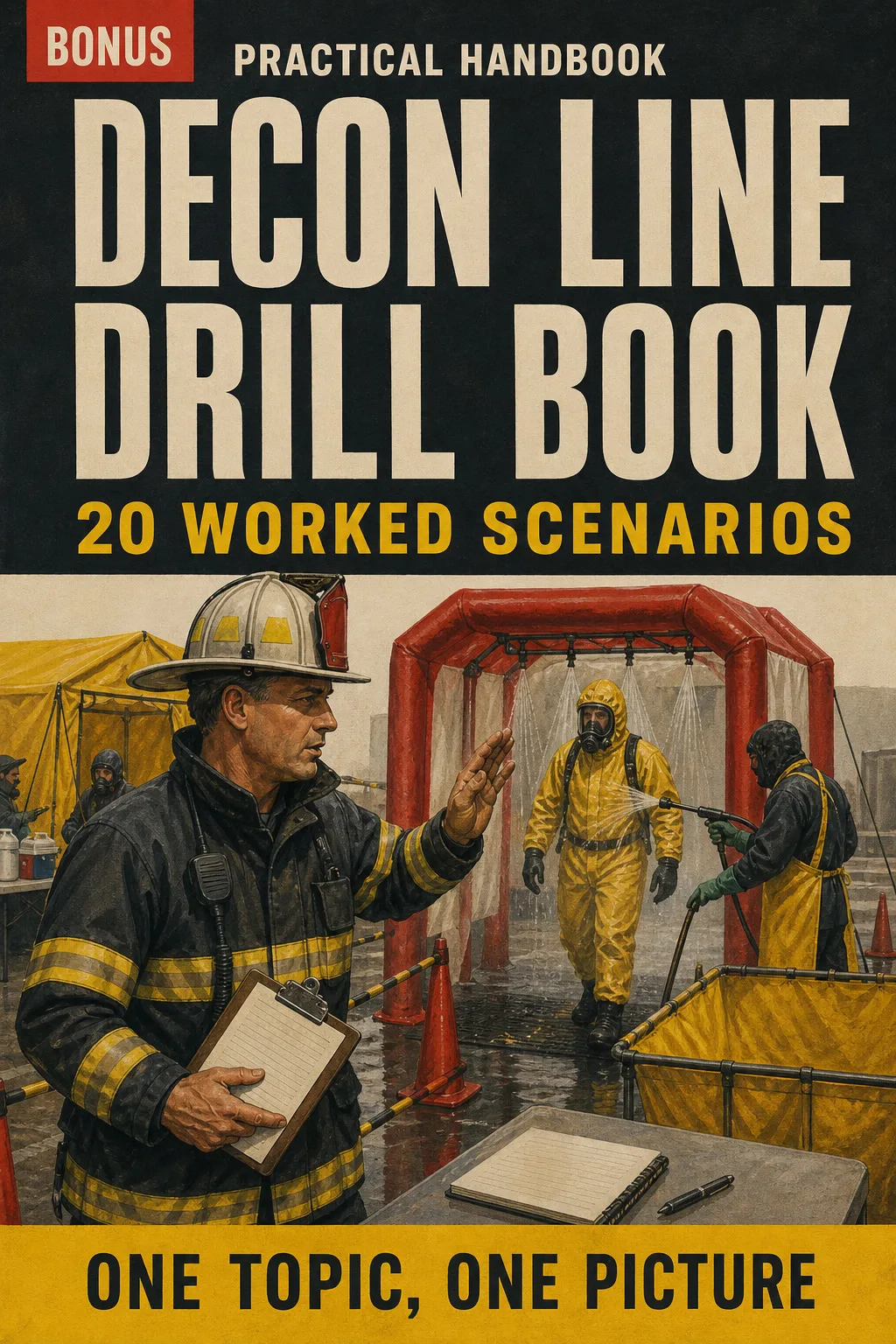
Decon Line Drill Book: 20 Worked Scenarios

BONUS 1: «Decon Line Drill Book: 20 Worked Scenarios»

Value on its own: US$ 17.90

Run a real drill night: 20 short scenarios (wind shift, cold weather, kids in the line, a litter patient) with the answer drawn on the next page.

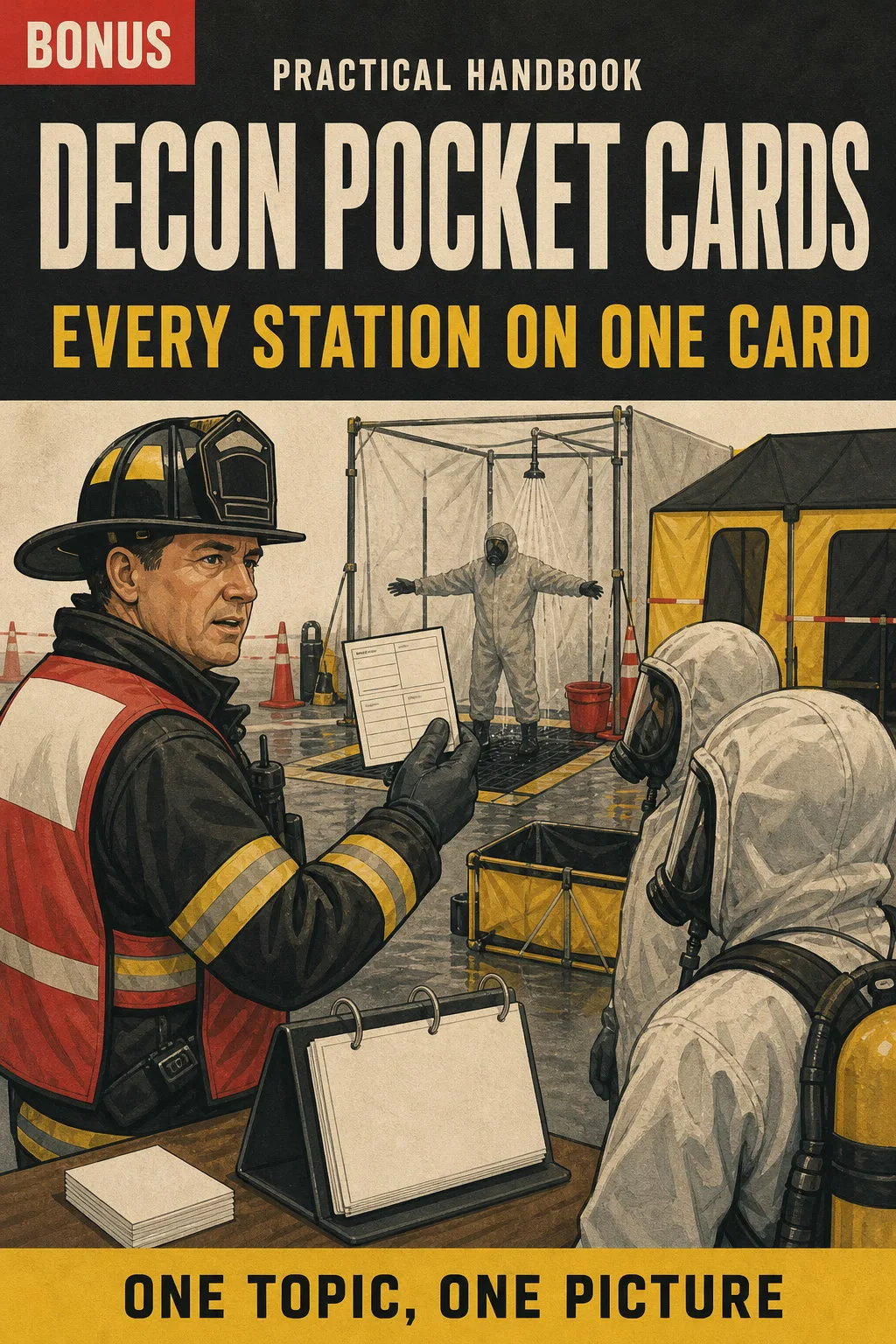
Decon Pocket Cards: Every Station on One Card

BONUS 2: «Decon Pocket Cards: Every Station on One Card»

Value on its own: US$ 14.90

Print the whole line on pocket cards, one station per card, so the order is in your turnout pocket when the call comes.

Hazmat Decon Illustrated with 2 Free Books

  • Hazmat Decon Illustrated: 65 illustrated pagesUS$ 63
  • BONUS 1: Decon Line Drill Book: 20 Worked ScenariosUS$ 17.90
  • BONUS 2: Decon Pocket Cards: Every Station on One CardUS$ 14.90
  • High-resolution PDF to printIncluded
Total value US$ 95.80
YOUR PRICE:
US$ 27
You save US$ 68.80
YES, I WANT HAZMAT DECON ILLUSTRATED FOR US$ 27

📄 This is a digital PDF book sent to your email: nothing is printed or shipped.

Secure purchaseEncrypted payment30-day guarantee

PDF by email: We email you Hazmat Decon Illustrated as a PDF, together with the two free books. It's a single payment: no installments, no extra charges.

Who This Book Is For

You're refreshing decon

You're refreshing decon

You took the course years ago. Here every zone and station is a drawing, so the order comes back at a glance.

Your hazmat ops or tech class is coming up

Your hazmat ops or tech class is coming up

Decon is one block among many in the class. Here every station has its own page, so you walk in having already seen the whole line.

You're on the hospital decon team

You're on the hospital decon team

The tent goes up once a year. The first receiver pages and the C1-C3 lanes keep the patient flow clear for the day it's real.

Everything You Get Today

US$ 95.80US$ 27
YES, I WANT HAZMAT DECON ILLUSTRATED FOR US$ 27

📄 This is a digital PDF book sent to your email: nothing is printed or shipped.

30DAYS
GUARANTEE

30-Day Guarantee

Try Hazmat Decon Illustrated for 30 days, bonus books included.

We refund everything if the file won't open, if the book isn't what you see here, if you were charged twice or if the email doesn't arrive. Just email us.

You pay once. No subscriptions.

Frequently Asked Questions

Is it for me if I've already taken the hazmat course and have years on the job?

Yes. It's not a beginner course: it's the whole decon line drawn in the same order, to refresh at a glance and have on hand in the apparatus or at drill night.

Where does the content come from?

From current US guidance: the current edition of NFPA 470 (the standard that replaced NFPA 472 and 473), OSHA HAZWOPER, OSHA best practices for hospital first receivers, the current ERG, HHS/ASPR PRISM guidance and EPA guidance on runoff. The sources are listed in the book, and each distance and interval is marked so you can check it against the current version and your SOP.

Is this official material?

No. It's an independent illustrated training book. It cites the sources descriptively, isn't affiliated with or endorsed by any agency, and doesn't come with a certificate or CE hours.

Does it replace my training or my department's SOP?

No. It doesn't replace formal hazmat training, your SOP, medical direction or your hospital's emergency plan. Every department sets up a little differently: the book draws the common US layout and leaves a blank page so you can write your own SOP next to it.

Are the drill scenarios official exercises?

No. The 20 scenarios in the bonus book are written for this book, to practice with your crew.

When and how do I get it?

The book and the 2 bonus books come as a PDF by email, to the address you enter at checkout.

Do I have to pay every month?

No. It's a one-time payment.

Can I have it on paper?

We don't ship a printed book: it's a PDF by email that you can print, the whole book or just the pages you want for the station, the apparatus or your turnout pocket.

How does the refund work?

You have 30 days. We refund everything if the file won't open, if the book isn't what you see on this page, if you were charged twice or if the email doesn't arrive: just email us.

Before You Close This Page

No more rereading the binder and forgetting it by the next call.

The corridor and the stations, drawn so they stick.

You show up to the call knowing where every station goes.

Drawings make studying faster.

The book is right below.

One-time payment: US$ 27 · Guarantee: 30 days · PDF by email

YES, I WANT HAZMAT DECON ILLUSTRATED FOR US$ 27

📄 This is a digital PDF book sent to your email: nothing is printed or shipped.